Reach out to inquire further.

The Complete Guide to Montessori at Home—From Birth to Age 6
Montessori at home from birth to age 6—a room-by-room, age-by-age guide to creating a prepared environment where your child thrives and your home stays beautiful.
MONTESSORI IN THE HOME
Chelsea Larsen
11/30/20258 min read
The Complete Guide to Montessori at Home—From Birth to Age 6
There's a moment I witness again and again in the homes I work with: a child, barely two, carefully pouring water from a small pitcher into a glass. No one hovers. No one corrects. The child's concentration is absolute, and the room around them—calm, ordered, filled with natural materials—feels like it was designed for exactly this kind of quiet mastery.
That's montessori at home. Not a curriculum. Not a set of expensive toys. It's a way of seeing your child as a capable, whole person from the very first breath—and shaping your home environment to honor that truth.
I'm Chelsea, the founder of Kin & Co, and over the years I've helped hundreds of families build montessori home environments that feel both deeply intentional and genuinely livable. This guide is everything I've learned—a room-by-room, age-by-age walkthrough for creating a prepared environment where your child thrives and your home stays beautiful.
What Montessori at Home Actually Means
What is montessori at home? Montessori at home is the practice of applying Montessori principles—freedom of movement, a prepared environment, natural materials, and respect for the child's developmental pace—within your own living spaces rather than a classroom. You can begin from birth and adapt the environment as your child grows through each developmental stage.
Dr. Maria Montessori observed that children learn most powerfully through their environment—not through instruction, but through interaction with carefully chosen materials and the freedom to explore at their own rhythm. The [Association Montessori Internationale (AMI)](https://ami-global.org) has preserved these principles for over a century, and they translate beautifully from classroom to home.
A montessori prepared environment in the home rests on four pillars:
- Freedom of movement. From the earliest weeks, your child has space to move, reach, roll, crawl, and eventually walk—without being confined to containers or devices that restrict their natural development.
- Respect for the child. We observe before we intervene. We offer choices rather than directives. We trust the child's inner developmental timeline.
- Natural materials. Wood, cotton, linen, silk, ceramic, metal. Materials that have weight, warmth, and texture—that connect your child to the real world rather than a plastic approximation of it.
- Order. Everything has a place. Shelves are uncluttered. Activities are limited and rotated. The environment is calm, predictable, and navigable for small hands and growing minds.
This isn't about perfection. It's about intentional rhythms—small, thoughtful adjustments to your home that create space for your child's independence to unfold naturally.
## Why I Believe Every Home Can Be a Montessori Home
One of the most persistent myths I encounter is that montessori at home requires a complete overhaul—that you need a dedicated Montessori room, a specific color palette, or a particular set of handmade materials imported from Italy. That simply isn't true.
The families I work with live in all kinds of homes. Some have sprawling estates; others have beautifully curated urban apartments. What they share is a desire to be intentional about how their spaces serve their children's development—without sacrificing the aesthetic and atmosphere they've worked hard to create.
In fact, Montessori and thoughtful design are natural partners. A prepared environment is, by definition, a considered one. Low shelves with a few carefully chosen materials. Open floor space. Natural light. Muted tones punctuated by the warmth of wood and the softness of linen. Maria Montessori wrote in The Absorbent Mind about the child's sensitivity to beauty and order—and I've seen this truth confirmed in every home I've helped shape.
You don't need to start from scratch. You need to start from where you are, with eyes open to what your child is telling you they need.
Montessori for Newborns (0–6 Months)
The montessori journey begins the moment your baby arrives—or even before, as you prepare the space that will welcome them.
In these earliest months, the prepared environment is beautifully simple: a movement mat on the floor where your baby can stretch and gaze freely. A simple visual mobile hung just above—the Munari mobile first, with its black-and-white geometric shapes, followed by the Octahedron, the Gobbi, and the Dancers as your baby's visual development unfolds. A low mirror placed alongside the mat, where your newborn begins the quiet work of self-discovery.
The materials are few and exquisite: perhaps one or two rattles made from untreated wood, a soft cotton or linen lovey, and the warmth of your presence. What you leave out matters as much as what you include—no flashing lights, no electronic sounds, no visual clutter. Just a sanctuary of calm.
Is montessori good for babies? Absolutely. The first six months are what Maria Montessori called the period of the "spiritual embryo"—a time of extraordinary sensitivity and absorption. A prepared environment respects this by offering sensory richness without overstimulation.
For a deeper exploration of every element—from the mobile progression to safe sleep considerations to freedom of movement from day one—read my full guide to [montessori nursery setup for newborns](/blog/montessori-for-newborns-prepared-environment).
Montessori for Crawlers and Early Explorers (6–12 Months)
Around six months, everything shifts. Your baby begins to move with purpose—reaching, rolling, crawling, pulling up—and the prepared environment must evolve to match this glorious explosion of mobility.
This is the stage of the treasure basket: a low, sturdy basket filled with natural objects of varying textures, weights, and temperatures—a wooden egg, a metal whisk, a silk scarf, a smooth stone. Your baby explores each object with every sense, building neural pathways through direct, hands-on experience.
Low open shelves replace the movement mat as the center of your baby's world, holding three or four carefully chosen activities that rotate as your child's interests evolve. The floor space remains clear—an invitation to crawl, cruise, and eventually take those first trembling steps.
The [American Montessori Society](https://amshq.org) describes this as the sensitive period for movement, and I see it honored most powerfully in homes where the environment says yes more often than no. Baby-proofing the Montessori way isn't about removing everything—it's about creating freedom within safe limits.
Discover the full approach to [supporting crawlers and early explorers](/blog/montessori-6-to-12-months-crawlers-explorers) in my dedicated guide for this age.
Montessori for Toddlers (12–24 Months)
If there's a single stage where montessori at home truly comes alive, it's the toddler years. This is the explosion of independence—walking, talking, asserting preferences, wanting desperately to do it themselves.
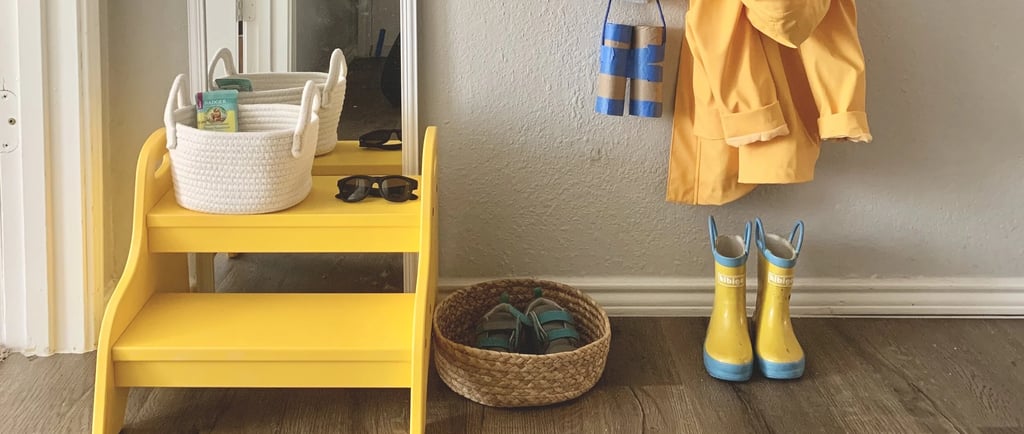
The prepared environment for a toddler is one where independence isn't just possible—it's inevitable. Child-height shelves hold six to eight rotating activities. A small table and chair invite your toddler to sit for meals, art, and work. A low wardrobe with two or three outfit choices allows your child to dress themselves each morning—a small act of autonomy that ripples through the entire day.
Practical life begins in earnest: hand-washing at a step stool, setting the table with child-sized dishes, watering the plants, helping in the kitchen from a learning tower. These aren't chores. They're the activities that build concentration, coordination, and a deep sense of belonging in the family.
What age should you start montessori? You can begin from birth, but if you're coming to Montessori for the first time with a toddler, this is a wonderful entry point. The principles translate immediately into daily life, and the transformation in your child's confidence and capability can be breathtaking.
For a complete room-by-room walkthrough of the toddler prepared environment—including the kitchen, the dressing area, and practical life activities—explore my guide to [montessori prepared environment for toddlers](/blog/montessori-for-toddlers-12-24-months).
Montessori for 2–3 Year Olds
Between two and three, your child enters what I think of as the age of mastery. The skills introduced during the toddler months deepen and refine. Pouring becomes precise. Dressing becomes independent. And practical life—the heart of Montessori at this age—expands into every corner of your home.
This is when I see children begin to truly care for their environment: sweeping up crumbs, wiping the table after a meal, folding small cloths, arranging flowers in a vase. It's also the season of toilet learning—approached the Montessori way, which means following the child's readiness, preparing the bathroom with accessible tools, and holding the process with calm patience rather than pressure or timelines.
The prepared art space comes into its own now, too. Open shelves with rotating materials—watercolors, clay, pastels, collage supplies—all made from natural, high-quality materials. Process over product. The goal is never a perfect painting; it's the concentration, the sensory experience, the satisfaction of creating.
Dive deeper into [practical life and prepared spaces](/blog/montessori-2-3-year-olds-practical-life) for this transformative age.
Montessori for Preschoolers (4–6 Years)
By four, the Montessori child at home is a remarkable person: independent, curious, capable of sustained concentration, and hungry for knowledge about the wider world.
This is where the prepared environment expands into cultural subjects—geography with puzzle maps and flags, nature study with a magnifying glass and field journal, early science experiments that spark genuine wonder. It's where literacy emerges through sandpaper letters and the moveable alphabet, and where numeracy takes root through hands-on materials like number rods and spindle boxes.
For families considering whether to complement a Montessori school program or build a full [montessori preschool at home](/blog/montessori-preschoolers-4-6-year-old-home), this stage offers extraordinary possibilities. The rhythm follows the child's natural concentration cycles—long, uninterrupted work periods in the morning, outdoor exploration in the afternoon, and living books woven throughout.
The Role of a Montessori-Trained Caregiver in Your Home
I've guided families through every stage I've described here, and the single factor that transforms implementation from aspiration to lived reality is professional support. A caregiver who has Montessori training—who understands sensitive periods and the absorbent mind, who can prepare an environment and then step back to observe—changes everything.
This isn't about outsourcing parenthood. It's about having a partner in your home who brings deep expertise to the daily rhythms of your child's life. Someone who knows when to present a new material and when to wait. Who understands [why continuity of care matters](/blog/continuity-of-care-first-year) across developmental stages. Who can adapt the environment as your child grows, so the prepared home evolves seamlessly from the newborn sanctuary to the preschooler's learning space.
The families I work with often tell me that their caregiver didn't just help their child—they helped the whole family find its rhythm.
If you're building a Montessori-inspired home and want a caregiver who understands this philosophy in their bones, I'd love to hear about your family. [Book a Discovery Call](https://kinandco.life/discovery).
Frequently Asked Questions
How do I set up a montessori home?
Start with one room—usually the living area or your child's bedroom. Lower a few shelves to child height, choose three to five activities made from natural materials, clear the floor for free movement, and remove visual clutter. The prepared environment doesn't require a renovation; it requires intention. Observe your child, notice what they're drawn to, and shape the space around their developmental needs.
What age should you start montessori?
From birth. The first six months are a period of extraordinary absorption, and a thoughtfully prepared environment supports your newborn's development from day one. That said, it's never too late to begin. Whether your child is six weeks or six years old, Montessori principles can transform your home life.
Do I need special Montessori materials?
Not necessarily. Many Montessori activities use everyday household items: a pitcher and glass for pouring practice, a small broom for sweeping, a basket of natural objects for sensory exploration. When you do invest in materials, look for items made from wood, metal, or natural fibers—and prioritize quality over quantity. A few beautiful, purposeful objects are worth more than a roomful of plastic.
What does a montessori home look like room by room?
A montessori home is calm, ordered, and accessible. In the living area, low shelves hold a curated selection of activities. In the kitchen, a learning tower and child-height snack drawer invite participation. In the bedroom, a floor bed or low bed and a small wardrobe support independence. In the bathroom, a step stool and accessible hooks make self-care possible. Every room whispers the same message: you belong here, and you are capable.
Do I need a Montessori-trained caregiver?
A trained caregiver isn't required, but the difference is profound. A Montessori-trained nanny or newborn care specialist brings the prepared environment to life with an expertise that goes far deeper than room setup. They understand the philosophy—the observation, the patience, the precise timing of when to introduce new challenges. For families who want Montessori woven into the fabric of daily life, professional support is transformative.